TRUE SUSTAINABILITY THAT MAKES A DIFFERENCE
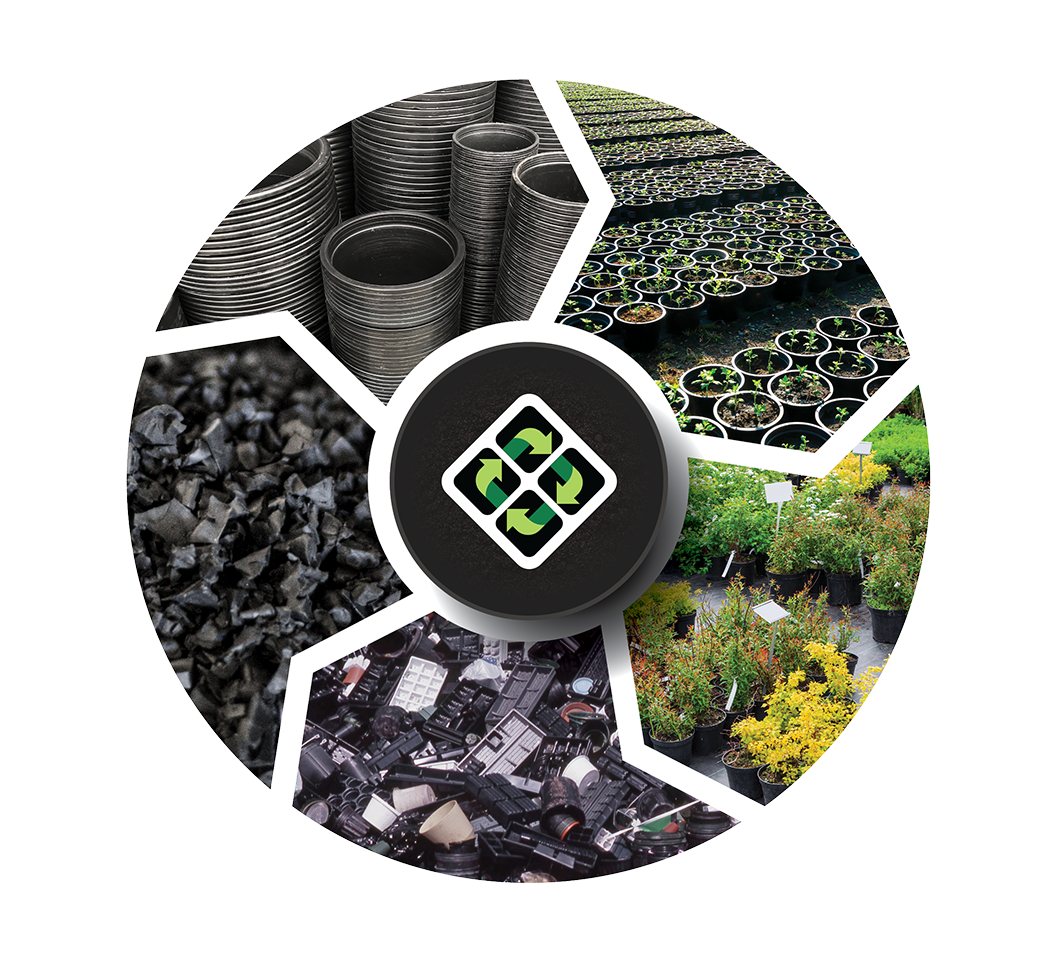
At East Jordan Plastics, sustainability is at the core of our business. Since the 1960s, we’ve pioneered practices that keep horticultural plastic out of landfills—including recycling more than 200 million pounds and creating products with up to 100% post-consumer recycled content through our closed-loop system. That’s true sustainability.
See Our Process in Action
Four manufacturing facilities, nearly 80 years of innovation, and a system that brings success to businesses, the industry, and our planet.
Why sustainability matters
OUR PROCESS
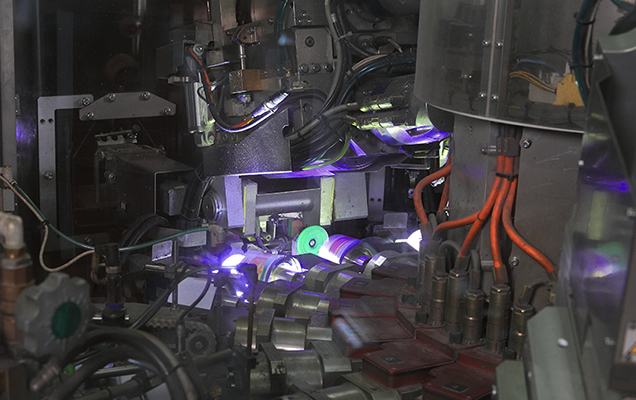
Through our sustainability initiative, we are actively working to reduce the amount of plastic sourced from overseas, shortening the supply chain with a truly closed-loop system.
WE MAKE PCR
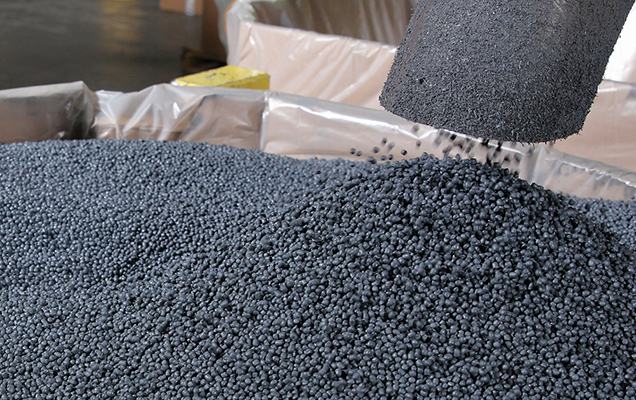
Other companies may buy PCR and use it, but we create certified 100% PCR.
SUSTAINABLE PARTNER
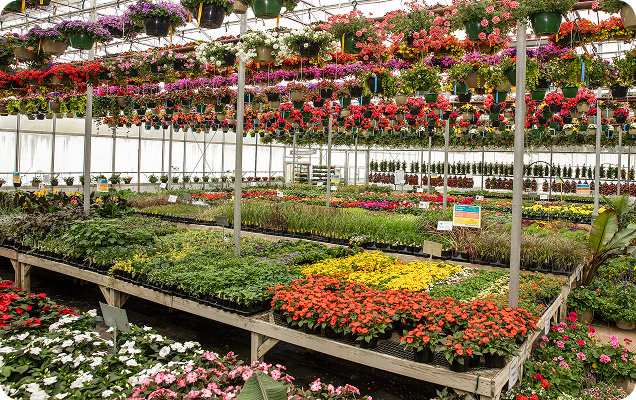
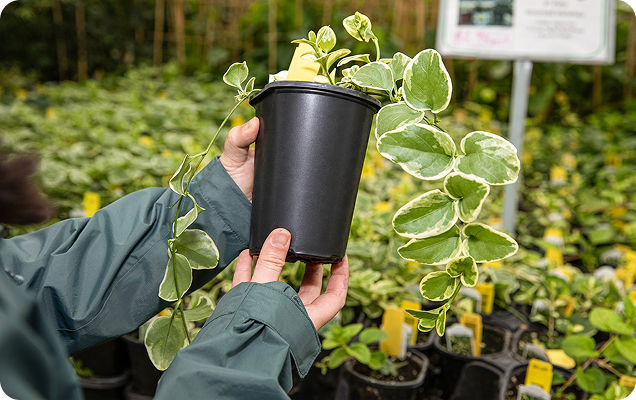
Partnering with East Jordan Plastics can help growers meet retailers’ sustainability requirements, giving them a competitive advantage in the marketplace.
MOVING FORWARD
With the support of growers, retailers, and consumers, our system keeps recycled horticultural plastic in our industry and out of landfills, with a vision to recycle 50 million pounds of used horticultural plastic every year.
Click through our process below to explore every step of our closed-loop system.

How our process works
Making new containers
At our 150,000-square-foot South Haven, Michigan and 260,000-square-foot Lyons, Georgia facilities, we recycle polystyrene, polypropylene, and HDPE containers generated from both greenhouses and retail stores. From these materials, we create and use certified 100% PCR material for all of our products.

How our process works
Going to growers and greenhouses
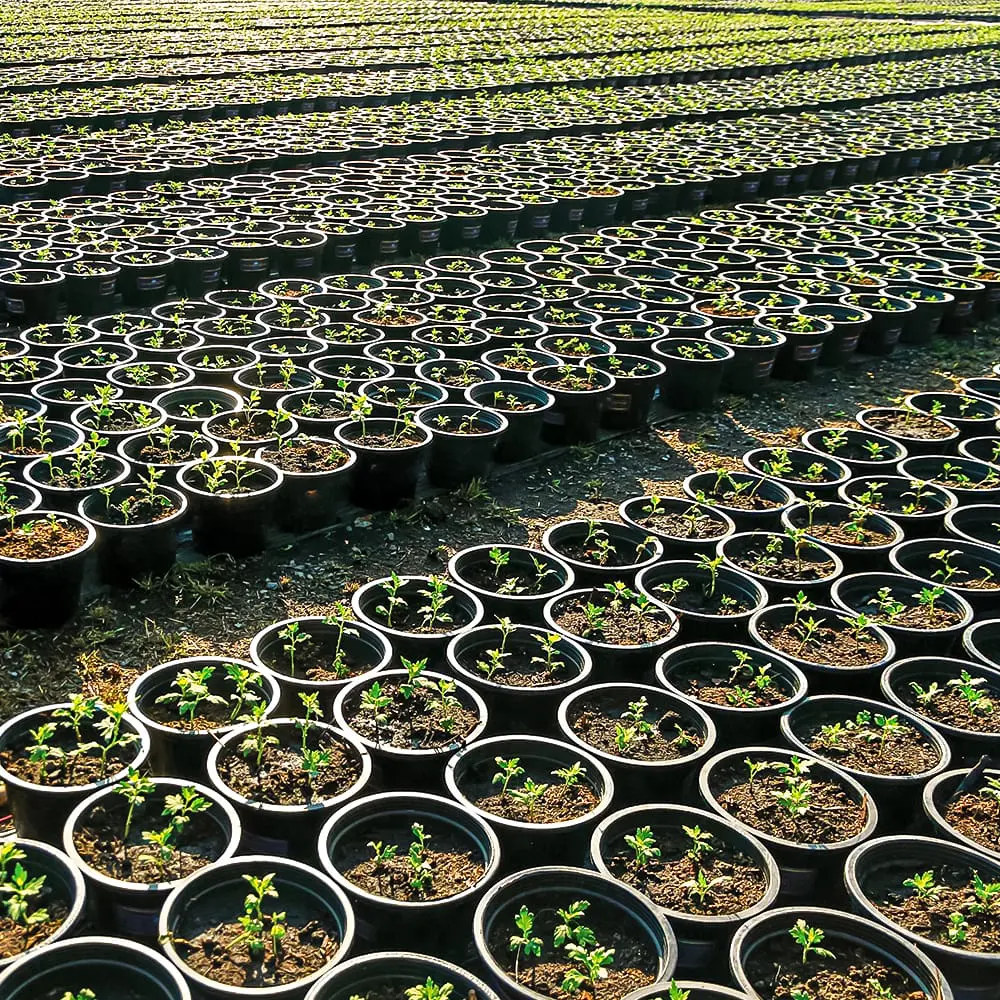
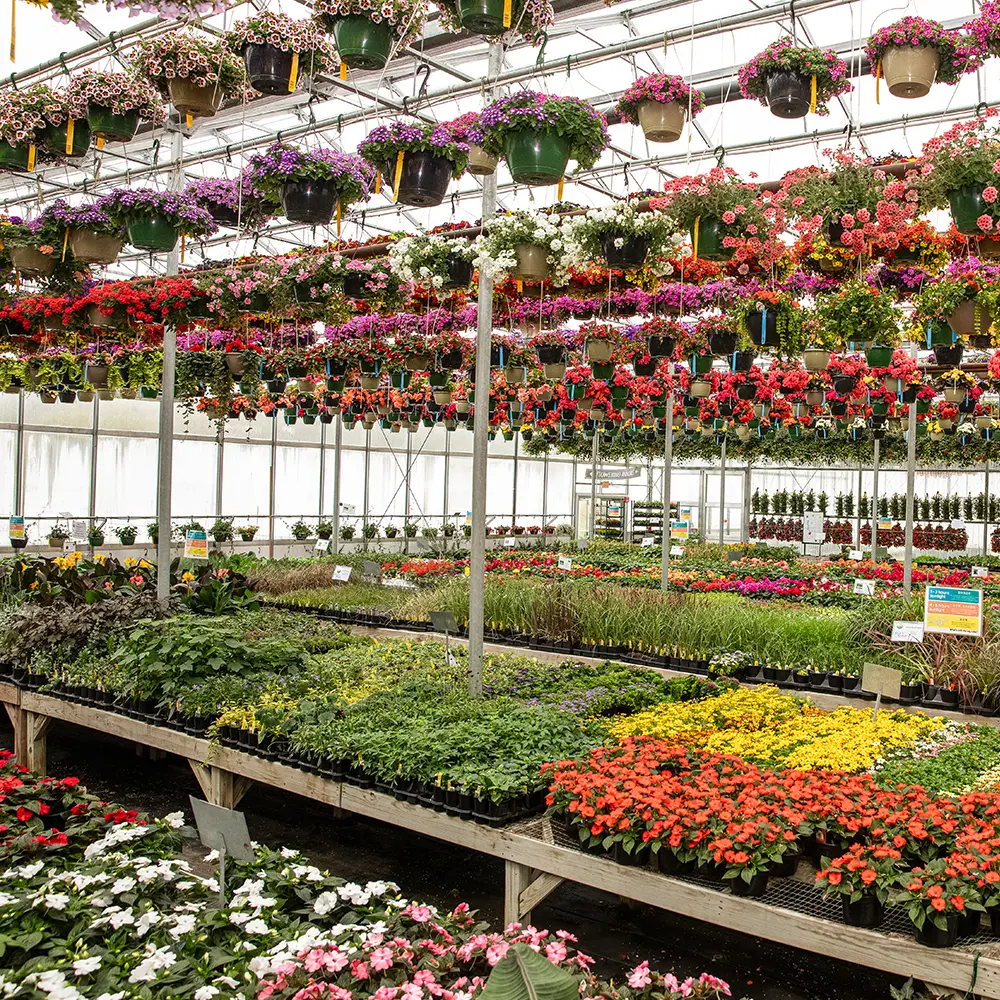
From our manufacturing facilities, containers are delivered to growers, who grow plants in the containers, then ship products to retailers for consumers to purchase.

How our process works
Back to consumers and retail
Consumers return their used growing containers to participating retailers. Most participating garden centers have a designated location with signs that instruct consumers where to return containers. When the carts are full and a grower returns to the store to deliver new plants, they take the full carts back to their greenhouse for sorting and consolidation.

How our process works
Reclaiming containers
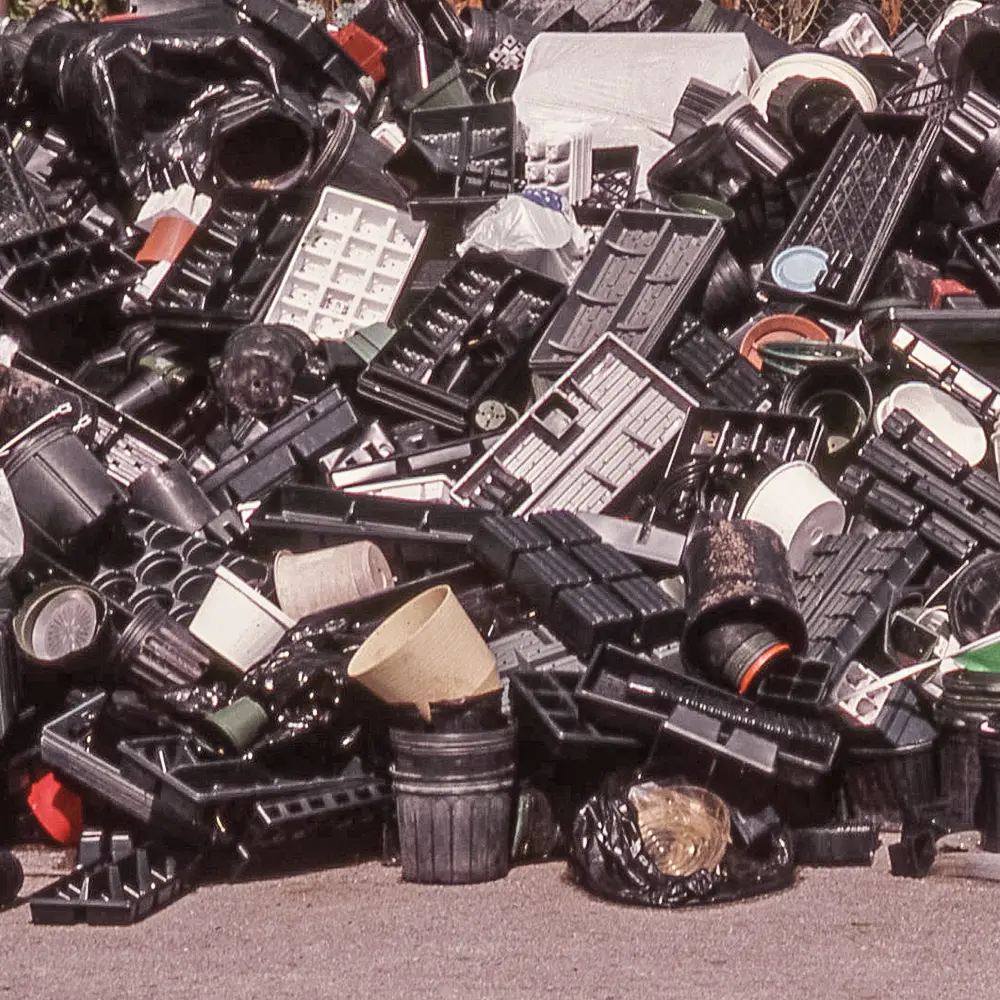
Plastic is sorted off the carts into different bins. When a grower has enough material, we coordinate for our trucks to pick the material up.

How our process works
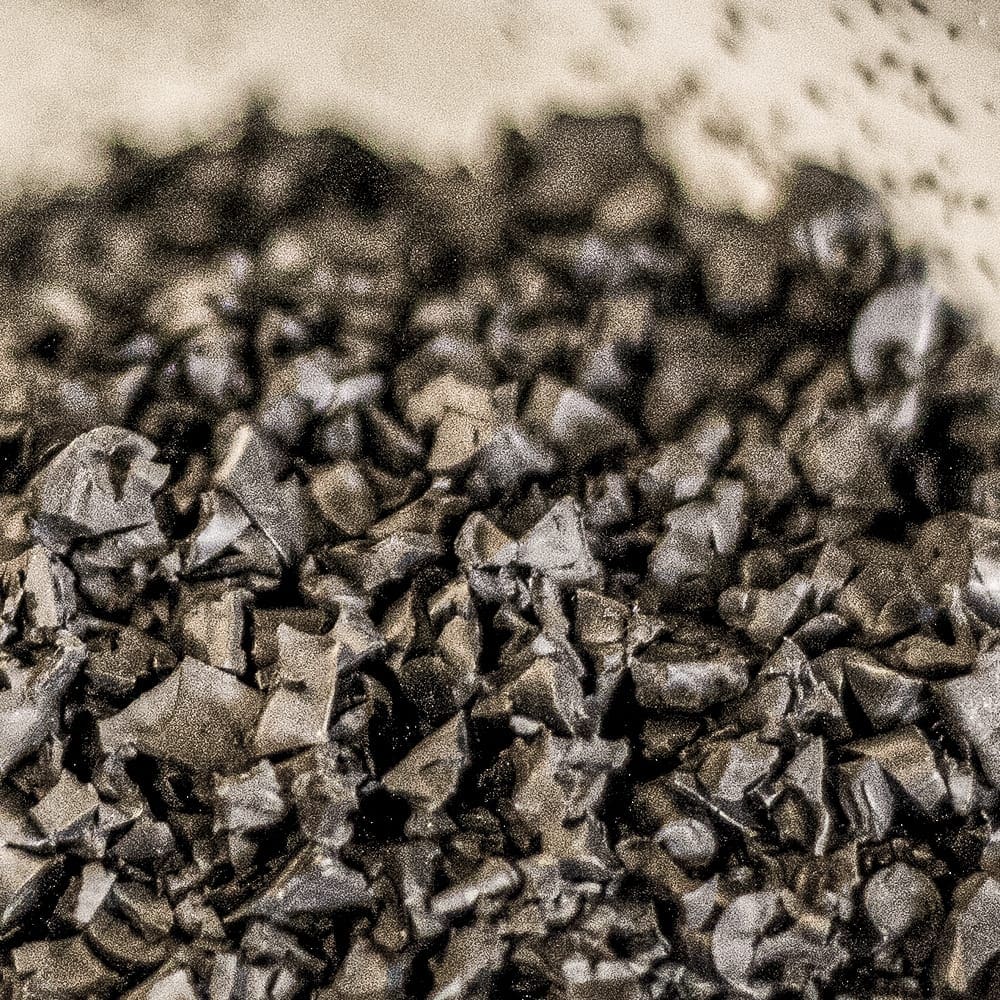
Regrinding material
We bring these materials back to our South Haven, MI and Lyons, GA facilities and turn them into good, clean regrind. After, we manufacture new, sustainably designed containers—made with up to 100% PCR content—for redistribution. Then, the process repeats (and repeats).
On average, across all product lines, more than 35% of the raw material we use in manufacturing is PCR, and 75% of the raw material we use is recycled content from North America.
Better for growers, the industry, and the planet

50 Million
We’re striving to recycle 50 million pounds of used horticultural plastic annually.
31,918 Cars
50 million pounds of recycled horticultural plastic is equivalent to 31,918 midsized cars worth of landfill space.
100%
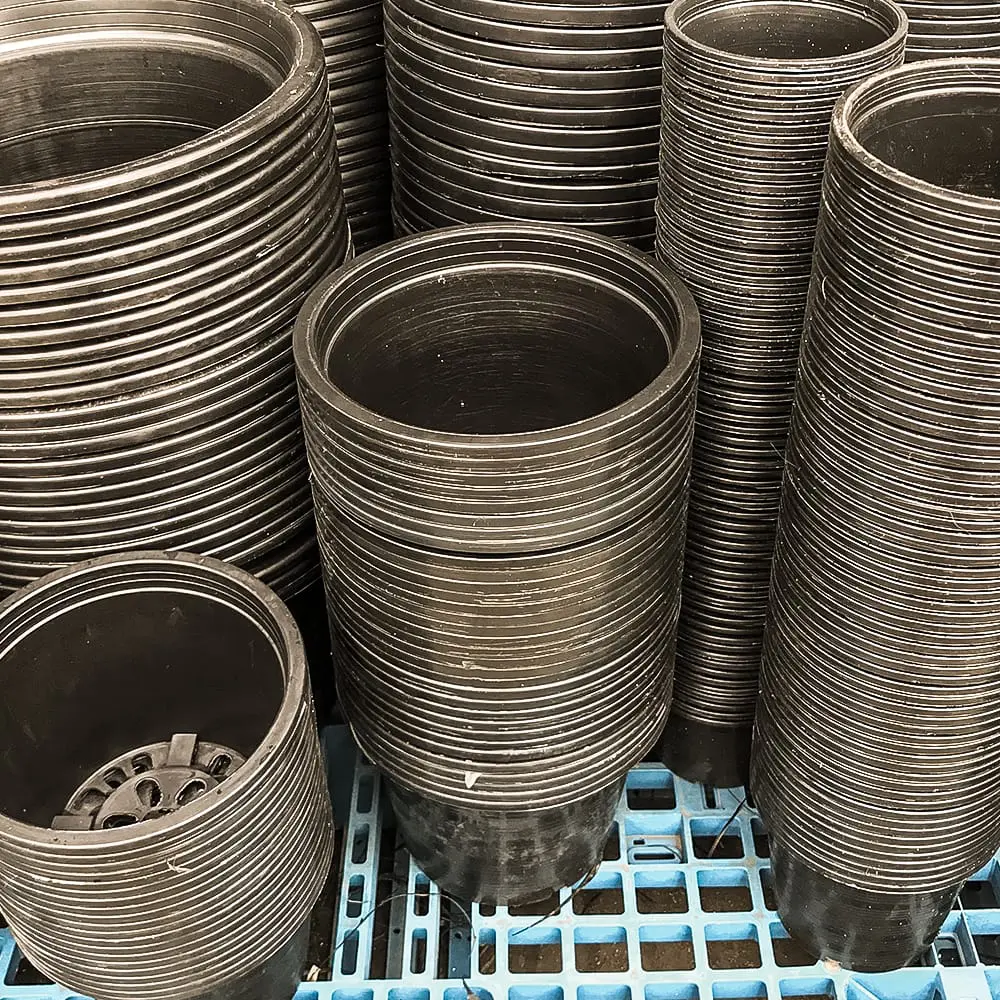
We create certified 100% Post Consumer Recycled (PCR) plastic “flake” material at our recycling facilities, which we use to create new horticultural containers.
400,000+
At our South Haven, MI and Lyons, GA facilities, we have more than 400,000 square feet of recycling and production space.
200 Million lbs.
Since the start of our recycling program, we have recycled more than 200 million pounds of used horticultural containers and trays.
Dig into the details
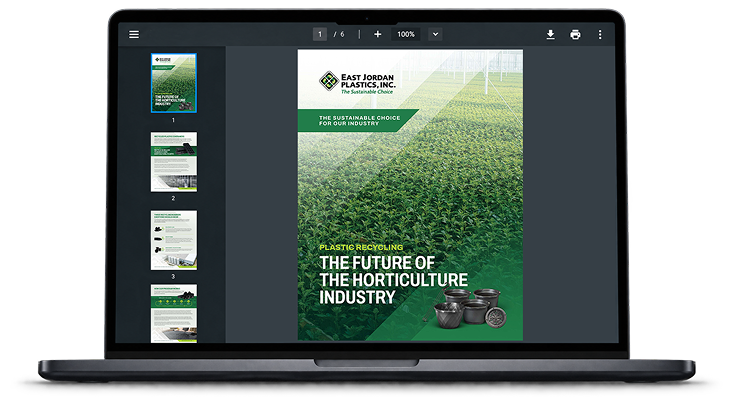
Learn everything you need to know about recycled horticultural containers and how we make a difference every day.
Frequently Asked Questions
Right now, consumers can take their used growing containers to participating retailers nationwide. Collection carts are located at these stores throughout the spring and summer months!
We currently cannot accept greenhouse film for recycling. East Jordan Plastics is not an end-user of this type of plastic.
We currently cannot accept empty plastic fertilizer bottles or other empty chemical bottles due to possible contamination.
No. These materials cannot be recycled and used to make new growing containers from polystyrene, polypropylene, and high-density polyethylene.
Growing containers do not need to be sorted by color, just by plastic type. We accept polystyrene (recycling symbol 6), polypropylene (recycling symbol 5) and high-density polyethylene (recycling symbol 2).
Yes, however each individual pallet or bale of plastic to be recycled must be comprised of the same material type.
East Jordan Plastics can pick up loads of plastic across the United States and in some areas of Canada.
Absolutely. If you’re interested in sending a delivery of plastic to us for recycling, please email sh_deliveries@ejplastics.com or call 269-637-3700 ext. 3320 in advance to schedule a delivery.
The minimum quantity for pick-ups is handled on a case-by-case basis, and you don’t necessarily have to have an entire truckload of plastic material to recycle. We work with growers to figure out a solution to help them get their plastic material to us.
However, in many cases, pick-ups are not guaranteed until we coordinate plastic material pick-ups with other growers in your area so our trucks can be as full as possible.
Anyone interested in recycling their horticultural containers can recycle them with EJP. However, purchasing your growing containers from EJP truly closes the horticultural container recycling loop.
Yes, in fact it’s encouraged. When multiple growers are consolidating their plastic material at a central location for pick-up, it is important that each grower mark each individual skid with their greenhouse information. This ensures that everyone gets credited properly.
For truckload quantities of plastic material, we can usually pick up within two weeks of being notified. When possible, we try to coordinate pick-ups of plastic to be recycled with the delivery of our finished growing container products or when a truck is in the area.
Yes, we can pick up less than truckload quantities of plastic material. However, we need to coordinate pick-ups with other growers so the returning trucks can be as full as possible.
A full truckload of material is 26 skids stacked to 90-100″ in height, so pallets need to be stable and heights should be 90-100″ or 48″ for double stacking.
Payment is dependent upon material type, quality of sorting, quantity of material, location, and current resin markets. For pricing in your area, call: 269-637-3700.
Payment can either be made by a credit to your account or by check. Many customers who purchase growing containers from EJP prefer to have their accounts credited. Checks are issued to customers who do not buy growing containers from EJP.
Yes. We have delivered pricing and FOB (your location) pricing.
Hear from customers who made the choice
Participate in our recycling program
Together, we can make The Sustainable Choice. Fill out the following form to learn how you can participate in the program and recycle your plastic growing containers.